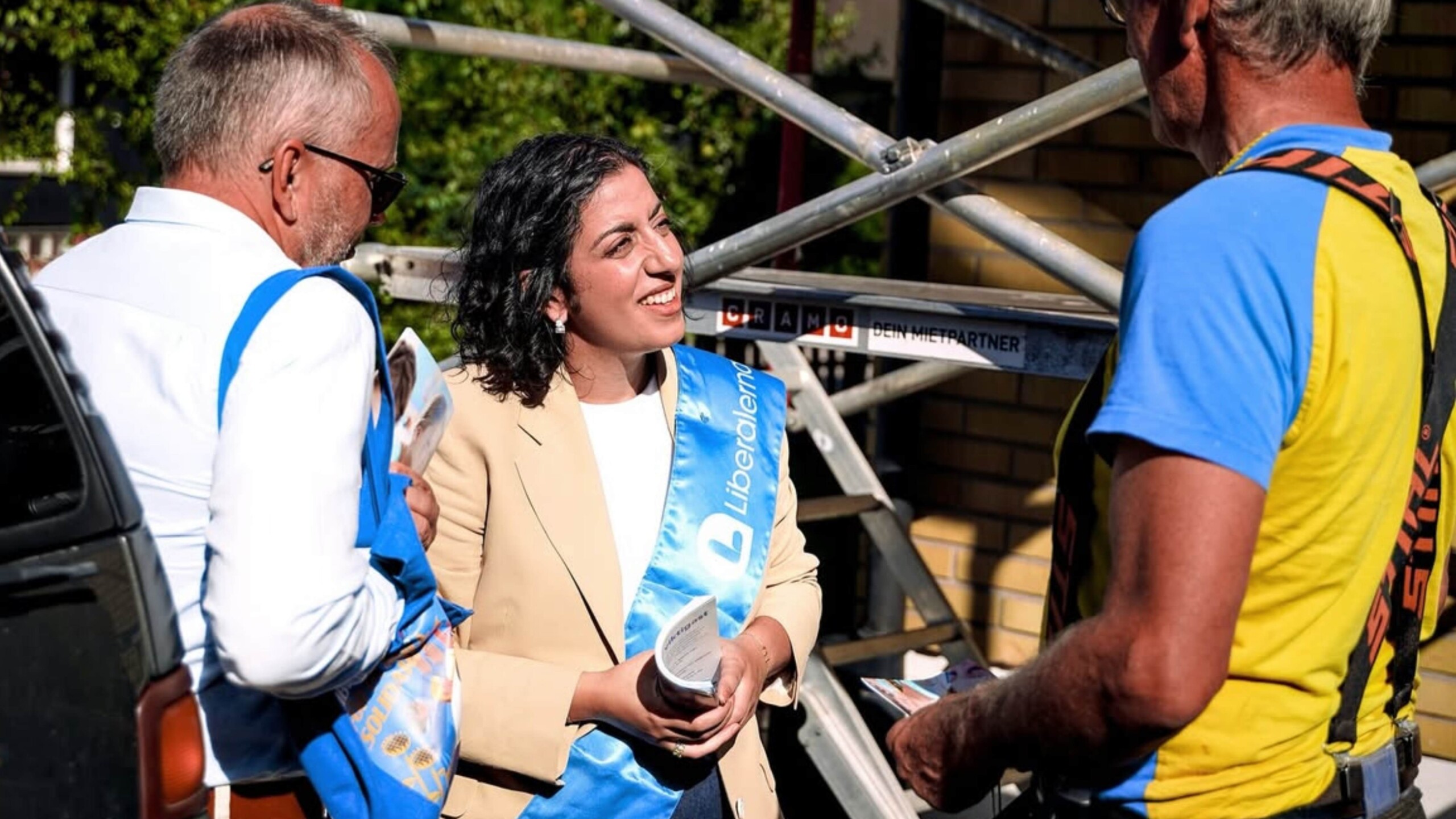
Swedish political parties: a crash course

The right to vote in Swedish elections for immigrants
First things first: yes, you can vote in Swedish elections even before you become a citizen. Not in all elections, and possibly not on the first day you arrive, but yes. So if you get some mail from Valmyndigheten, don't throw it out; if you're paying taxes here, you might be interested in how they're spent, and elections are a way to influence that.
Voter turnout in the latest Swedish election (2022) was 84,21%.
Elections to kommuner och regioner (municipal and regional assemblies)
Municipalities are in charge of a ton of things: schools and preschools, SFI, social services, rescue services, keeping the streets clean and the environment safe, and a bunch more. The regions are responsible for healthcare and public transport. To vote in this election, you have to be:
- 18 years old
- recorded in the population registry (folkbokföring — this is one of the first things you do with Skatteverket when you arrive)
- a citizen of an EU state, Iceland or Norway, OR a citizen of wherever else (or maybe even stateless) but have been recorded in Sweden's population registry for at least three years.
The parties on the municipal and regional level are almost the same as on the national level; you can have someone local like Sjukvårdspartiet i Värmland or Kirunapartiet on the ballot.
Election to the Riksdag (the Swedish parliament)
The parliament is where the new laws are being voted on, and to be eligible for this election, you'll have to wait until you're a Swedish citizen (and 18 years old).
Election to the EU parliament
The EU affects a lot of Swedish legislation. To vote in this election, you need to be a citizen in Sweden or another EU member (and 18 years old).
The Swedish political parties
There's a lot of history and fun facts about the Swedish political system, but in this post I want to focus just on the high-level overview for all the parties currently sitting in the parliament. When I moved to Sweden, I didn't really know why some people have stuff like (S) or (M) after their names, what do the references to various colors mean, and what on earth is the deal with all the flowers (roses, dandelions, liverleaves?). Since M, S, and their friends get mentioned constantly on the news, I thought it would be nice to have a little cheat-sheet in English I can link to from the news summaries I post every week.
M: Moderaterna / The Moderate Party

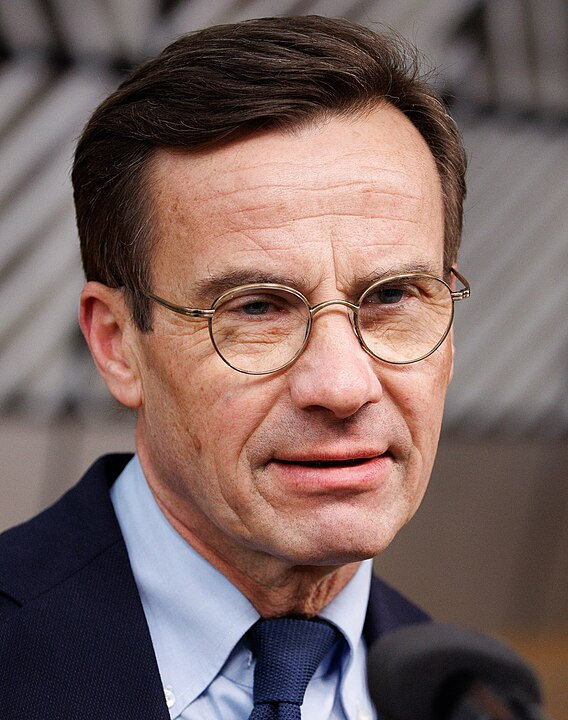
The Moderate Party's logo and a photo of Ulf Kristersson (By © European Union, 2025, CC BY 4.0, https://commons.wikimedia.org/w/index.php?curid=126937953)
This is a center-right, liberal-conservative party. They're into stuff like free market, privatisations, law and order, and tax cuts. Used to be the biggest on the right-wing side until recently, and their leader (Ulf Kristersson) is the prime minister. If you hear a commentator or a comedian referencing someone's height or calves (vader in Swedish), that's probably a hint at him.
They're sitting in the parliament with 68 out of 349 seats (19.5%) and govern together with L and KD with support and influence from SD, which is technically not part of the government. This is why you might see headlines starting with “Regeringen och SD...” — “The government and SD”.
Some things they often talk about:
- Tackling crime by tougher punishment and extending surveillance and other tools for the police
- Tackling dependency on benefits by “making it more profitable to work than to receive benefits”
- Investment in nuclear power
The color blue is associated both with this party in particular and the right wing in general.
S: Socialdemokraterna / The Swedish Social Democratic Party
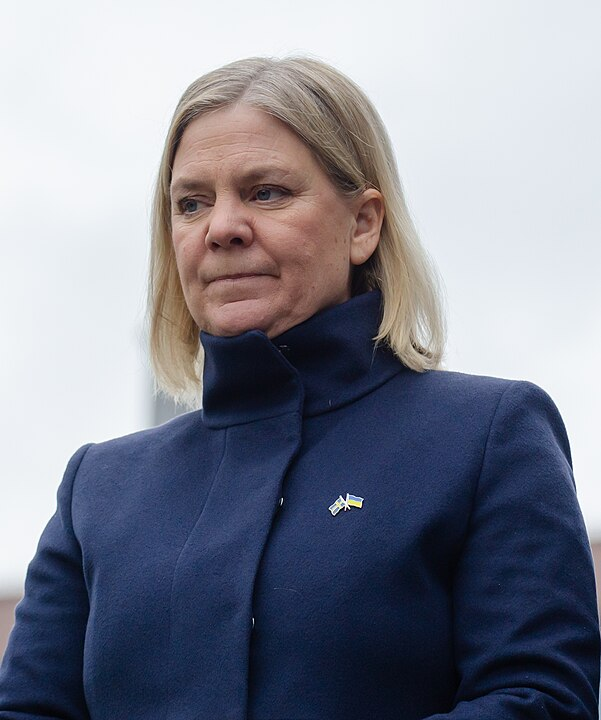
The logo of S by https://www.socialdemokraterna.se/, Fair use, https://en.wikipedia.org/w/index.php?curid=69705943 and Magdalena Andersson by FrankieF - Own work, CC BY-SA 4.0, https://commons.wikimedia.org/w/index.php?curid=145790000
This is a center-left party, and just as it says on the tin, it's a social democratic one. S is the oldest and still the largest Swedish party. They were in the government the whole time from 1932 to 1976, so sometimes they say they've built Sweden as we know it. They like worker solidarity and functioning social welfare, but they've also moved significantly closer to the right wing on topics like crime and immigration in the last few years, so there's not as much difference there anymore.
Magdalena Andersson is the leader of the party and currently the leader of the opposition as well. She was briefly a prime minister before the 2022 election, and a finance minister before that.
S has 106 out of the parliament's 349 seats (30%). Some things they talk about often:
- investing into the welfare system and having it under the democratic control
- the green transition with all kinds of power, not just nuclear power, and creating jobs
- good working conditions for all workers, good economy for all families
If someone is talking about sossarna, that's just a colloquial name for social democrats, the singular form being sosse. A red rose is their symbol and red in general is their color, as well as of the left wing in general.
SD: Sverigedemokraterna / The Swedish Democrats

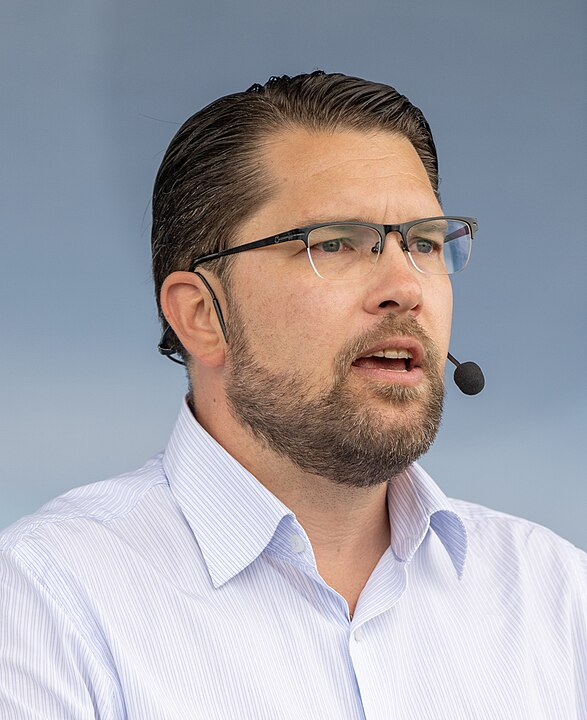
SD's logo on the left, Jimmie Åkesson on the right (by Tommy Winterskiöld Vestlie - This file has been extracted from another file, CC BY 2.0, https://commons.wikimedia.org/w/index.php?curid=133142017)
Often labeled as anti-immigration and right-wing populist, SD is a national-conservative party on the right side of the political spectrum. They are strongly opposed to the immigration and integration policy of the previous governments, EU-skeptical, and they mix-and-match from centre-left and centre-right on economical policy.
Jimmie Åkesson has been the leader of the party since 2005. If someone mentions Solveborg or motorcycle gang leaders at weddings, they're hinting at Åkesson. Brown is a color that gets mentioned when someone wants to remind the audience of SD's neo-Nazi connections, but in the context of, say, opinion surveys they're often depicted with yellow.
SD is the largest party on the right, with 72 out of 349 seats in the parliament (21%). They haven't been part of the government in their history yet, but intend to change that after the next election having said that they won't accept the position they currently have again. Some things they talk about often:
- limiting the immigration to Sweden and establishing stricter rules for the immigrants already here (“First you do your duty and then you can demand your right” — limiting welfare to citizens or putting in other conditions), more immigrants going back to their native countries
- harder punishment for criminals
- Sweden not producing that much emissions that it would be meaningful to reduce them while other countries emit more.
SD's symbol is a liverleaf (blåsippa in Swedish).
V: Vänsterpartiet / The Left Party
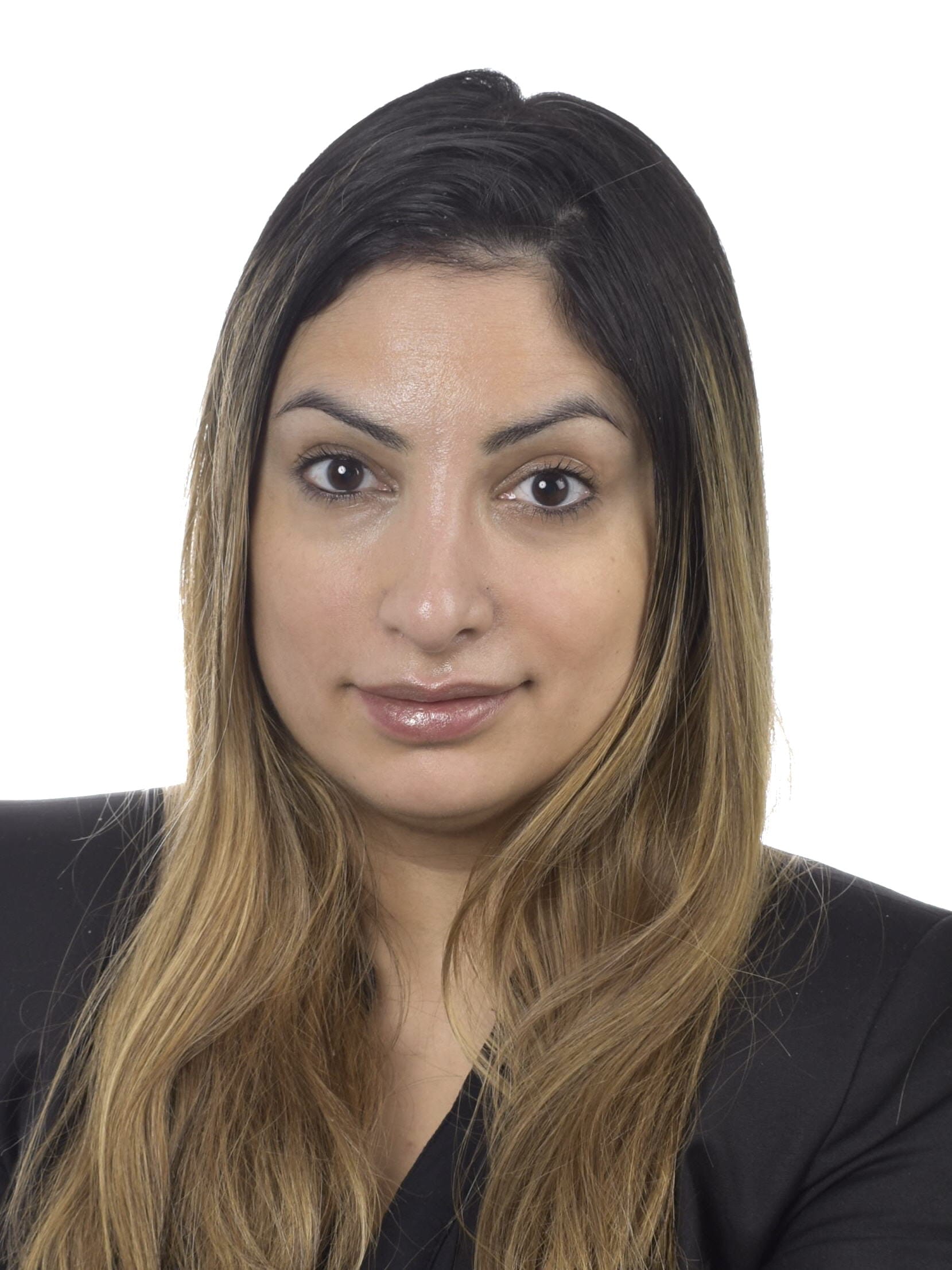
V's logo and Nooshi Dadgostar's portrait from regeringen.se
A socialist party on the left. They strongly oppose the current and previous governments' privatizations of things like schools, and are EU-skeptic but happy to collaborate on the environment initiatives. They like worker solidarity and equality of all kinds.
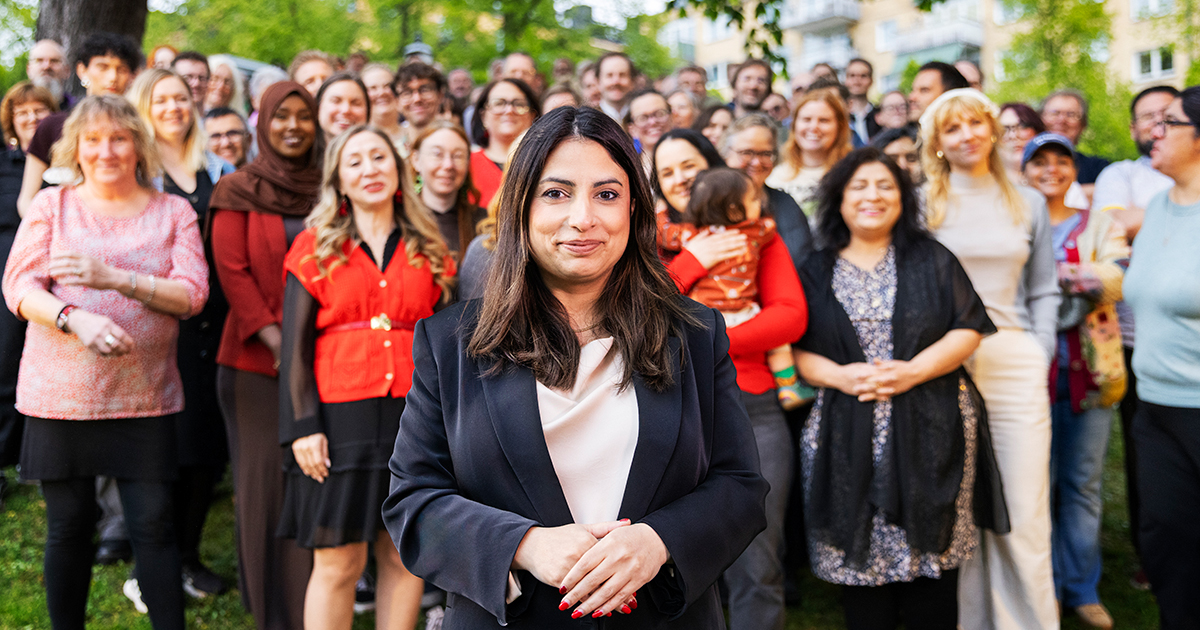
Nooshi Dadgostar is a relatively new party leader (since 2020), her predecessor being the popular Jonas Sjöstedt who is now in the EU parliament. She made waves in 2021 ousting a prime minister from S over his intention to end rent control (which would increase prices significantly).
V has 24 seats out of the parliament's 349 (7%). They've never been part of the government proper, but have supported left-wing coalitions like S+MP. Some things they talk about often:
- privatization of schools, railways, etc being a mistake
- dealing with crime and other societal problems by prevention (investing in schools, social services, etc)
- climate change and the green transition
- lack of affordable housing for everyone.
Their official flower is a red carnation. If someone in a debate with V is mentioning Marx, they're probably hinting at V's history as a communist party (VPK, where K is for Kommunisterna, was the name of the party until 1990). V also gets comments on their support of Palestine.
C: Centerpartiet / The Centre Party

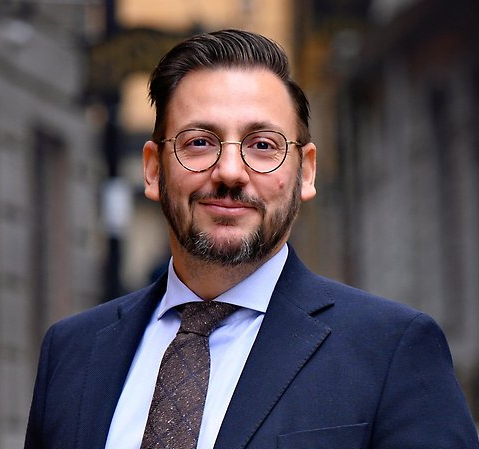
C is a liberal party somewhere between center and center-right on the political spectrum. They like free market, lower taxes, decentralization, and the green transition.
Muharrem Demirok has led the party since 2023 and had to withstand some jokes on the media about nobody knowing who he is.

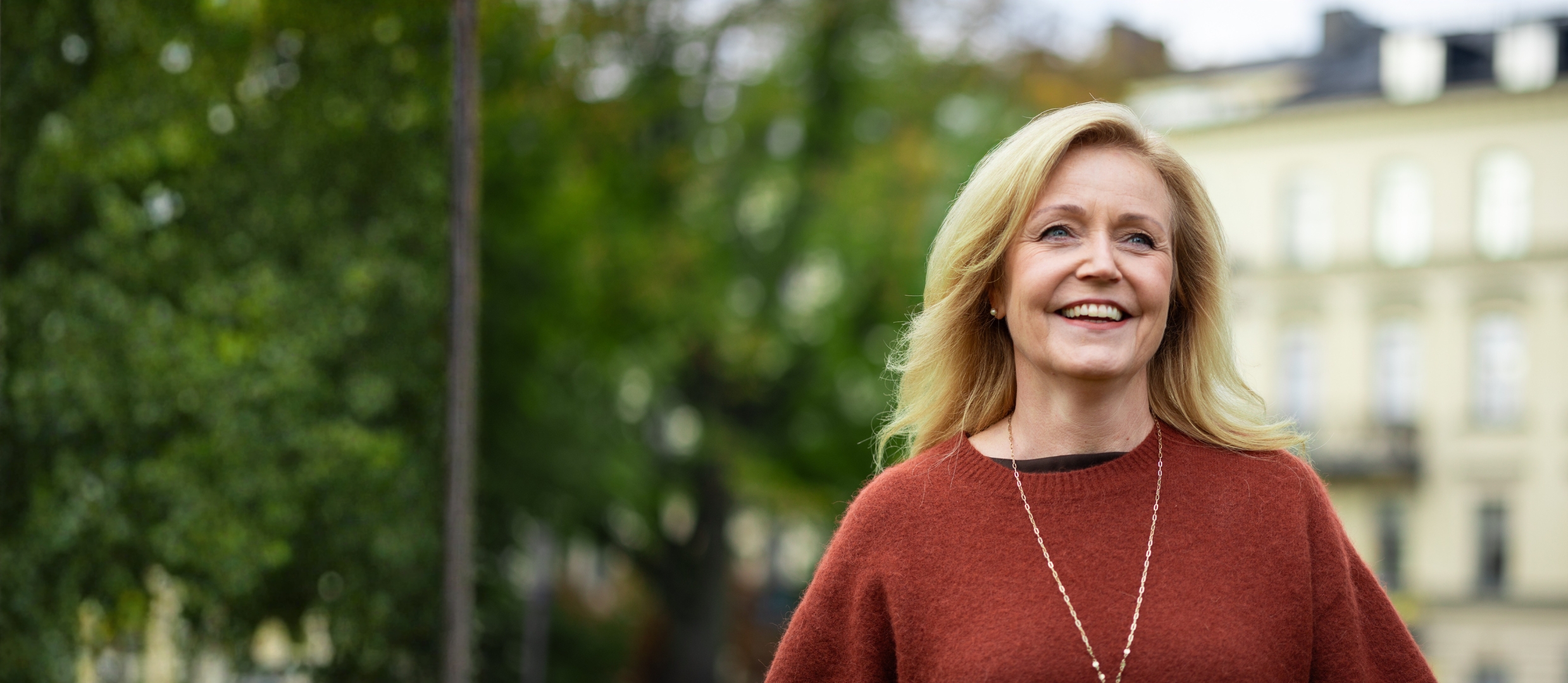
C has 24 out of 349 parliament seats (7%) and is open to collaboration with both right and left. Some things they talk about often:
- liberal market policies, standing to the right of the other right-wing parties economy-wise
- small businesses, rural part of Sweden
- climate change and the green transition.
Their symbol is a four-leaf clover, and their color is green.
KD: Kristdemokraterna / The Christian Democrats
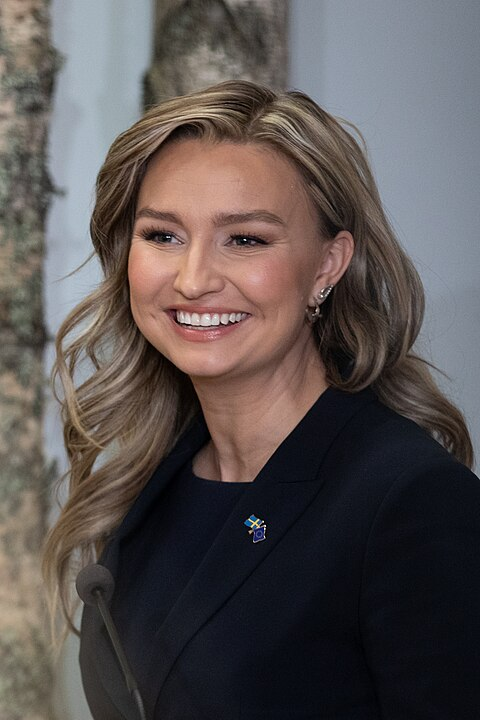
KD's logo and a portrait of Ebba Busch By Stina Virkamäki, valtioneuvoston kanslia - FinnishGovernment - https://www.flickr.com/photos/finnishgovernment/52520720684/, CC BY 2.0, https://commons.wikimedia.org/w/index.php?curid=125899964
KD is a Christian democratic party somewhere between center-right and right on the political spectrum. They like law and order and also Christian values, although it's not necessary to be Christian to join the party.
Ebba Busch is their leader as well as the deputy prime minister, the Minister of Energy, and the Minister of Business and Industry. She was the first one among other party leaders to open up for collaboration with SD.
KD has 19 seats out of the parliament's 349 (5%). They sit in the government together with M and L. Some things they often talk about are:
- nationalizing healthcare (taking the responsibility away from the regions)
- improving elderly care
- investing in nuclear power and lowering fuel prices.
Their color is blue, just like the other parties' on the right. If you hear about a speech with falukorv or a controversy around buying a house from an old, possibly confused/sick, person, these are hints at Ebba Busch. She's also a hunter.
MP: Miljöpartiet / The Green Party
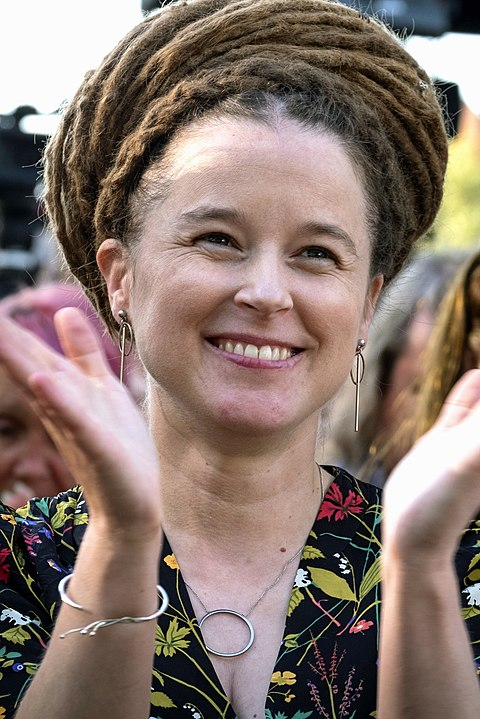
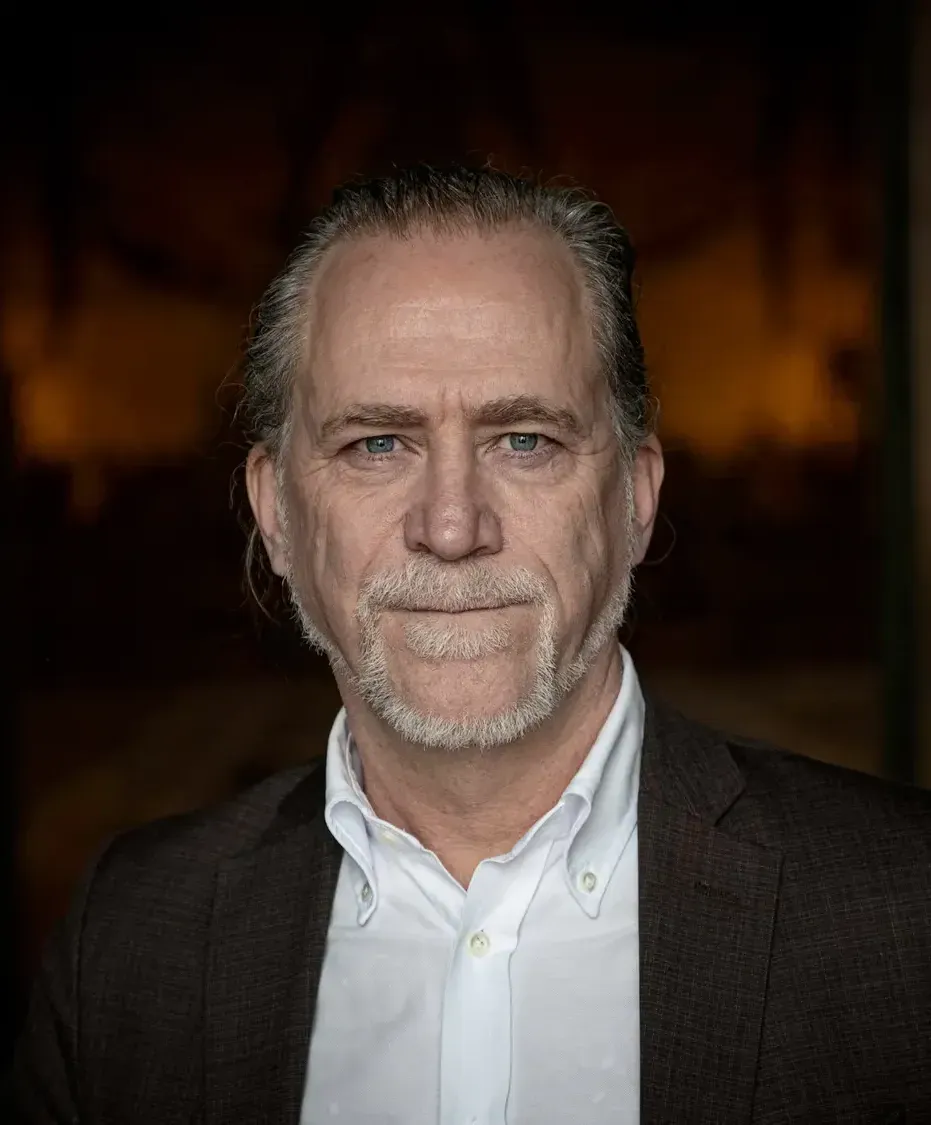
MP's logo, Amanda Lind (By Johan Wessman - News Øresund, Malmö, Sweden - https://www.flickr.com/photos/newsoresund/48176996067/, CC BY 2.0, https://commons.wikimedia.org/w/index.php?curid=81701994), Daniel Helldén (photo by Malin Hoelstad)
MP is a center-left party which likes, you guessed it, the environment, as well as equality, peace, and human rights. They're not fans of nuclear power, and they're a bit EU-skeptic, although of course on board for collaboration on preserving the environment. MP is not thrilled by privatization of schools.
Instead of one party leader, MP always has two spokespersons, one male and one female. Currently it's Amanda Lind, who used to be a Minister of Culture, Democracy, Sport and National Minorities in the previous government, and Daniel Helldén.
MP is in opposition these days and they have 18 seats out of the parliament's 349 (5%). They used to sit in the government with S (while V supported this coalition), and since their color is green, when you hear “rödgröna” that's either S+MP or S+V+MP. Here are some things they talk about often:
- climate change, the environment, the green transition and the jobs created by it
- equality and justice.
Their symbol is a dandelion.
L: Liberalerna / The Liberals

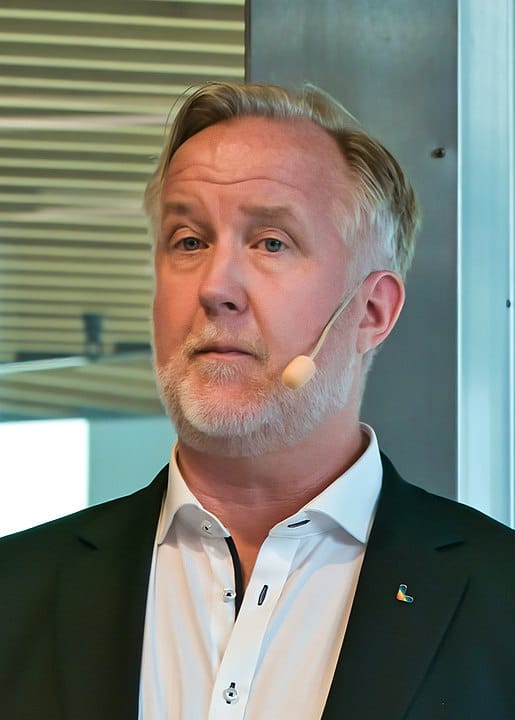
L's logo and Johan Pehrson (photo by FarbrorAnna - Own work, CC BY-SA 4.0, https://commons.wikimedia.org/w/index.php?curid=118303447)
L is a liberal party on the centre-right. They like EU, law and order, teachers, and free market. They don't like taxes that much. When it comes to integration, they are the party that emphasizes the Swedish language the most: for example, one of their proposals is a compulsory language preschool for children of immigrants, and they were also big proponents of adding Swedish as a requirement for the citizenship.
L is currently in the government together with M and KD, and they've got 16 seats out of parliament's 349 (4.6%). They're a bit at odds with SD on a number of questions, but the collaboration continues. Some things they often talk about:
- schools: “from skärm till pärm” (from screen to book cover), more control to the teachers, and stopping violence against them
- replacing Swedish krona with Euro
- investment in nuclear power.
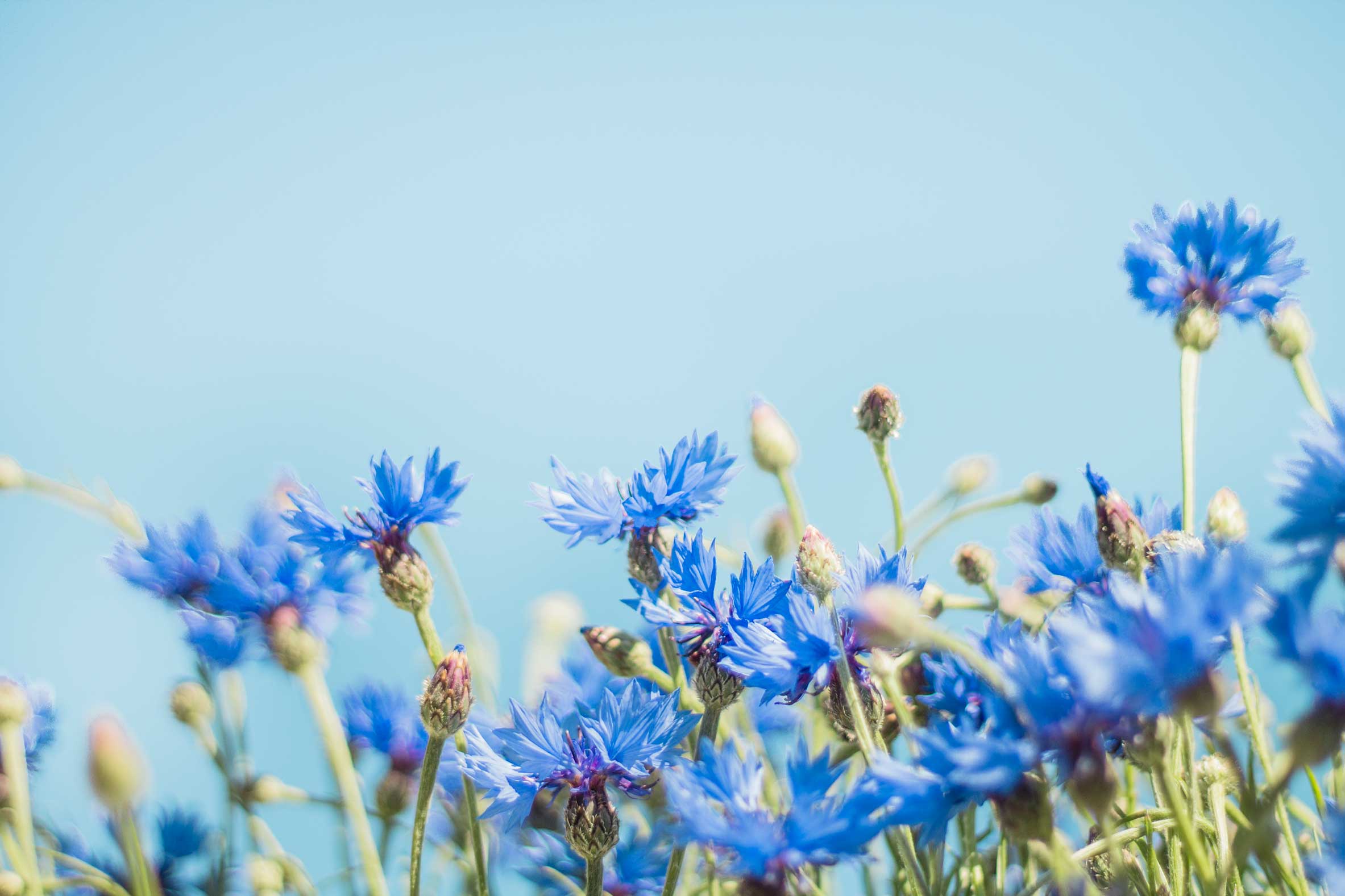
Their color is blue just as the other parties' on the right, and their symbol is a cornflower. They're one party that's at risk at not reaching the 4% threshold in the upcoming election.
Official sources (English or simplified Swedish)




https://moderaterna.se/app/uploads/2026/08/Engelska_utanutfall.pdf — M's party program in English


https://www.centerpartiet.se/download/18.dfc583619ed44a3c0beb971/1787139560403/Basfolder_2026_Engelska.pdf — C's party program in English
https://kristdemokraterna.se/download/18.2e2b5b3e18180017d1bdeb/1660212066883/6-sidig-multifolder-Allman-en-GB-final.pdf — KD's party program in English


OUTDATED: L has removed the English version of their policies' rundown